


From Venus to Victoria: A Journey Through Beauty Standards in Art History
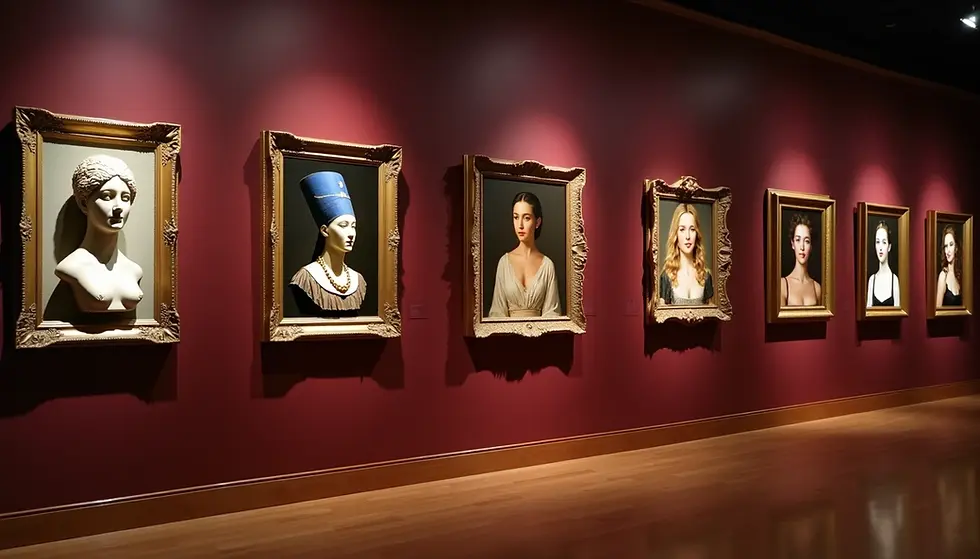
Art reveals something fascinating about beauty standards: they've never stayed the same. Physical beauty isn't a fixed set of features. It's more like a shared dream that captures our imagination from time to time. Through history and across cultures, beauty has meant many things: fertility, virtue, eroticism, power, purity and even submission.
The rise of female beauty standards in art history tells this story clearly. Artists have portrayed women differently across eras, from prehistoric Venus sculptures showing fertility to Nefertiti's perfect symmetry, from Byzantine Madonnas to the sensual figures in Pre-Raphaelite paintings. These artistic works show women as beings of sensuality, lust and passion. Beauty ideals changed drastically with time. Large buttocks became fashionable 150 years ago, while very thin figures gained popularity in the 1960s. Art has largely missed one expression of female beauty that emerged in the last decade: the powerful, muscled athlete.
Our trip through beauty standards will show how artists expressed their vision of female beauty over fifteen thousand years. Their work shapes how we understand beauty today.
Table of Contents
Prehistoric to Classical: The Birth of Beauty Ideals
Female beauty in art dates back tens of thousands of years. Art from these ancient times shows how the feminine form has always engaged humanity. These early artistic expressions shaped beauty ideals that would influence artists for thousands of years to come.
Venus of Willendorf and fertility symbolism
Beauty standards in art history began with the Venus of Willendorf, a limestone figurine created about 30,000 years ago. This Palaeolithic masterpiece stands just 11.1 centimetres tall. The figure's exaggerated form, generous breasts, pronounced buttocks, and emphasised vulva, suggests early societies valued female fertility above all else.
This Venus differs from today's beauty standards. She has no facial features, and her head shows circular horizontal bands that look like plaited hair or a headdress. Yes, it is this lack of individual features that suggests these figurines served as ritual objects or fertility totems rather than beauty portraits.
Researchers Catherine McCoid and LeRoy McDermott offer an intriguing theory. They suggest women might have created these figurines as self-portraits by looking down at their own bodies, possibly making this the first female self-representation in art history.
Egyptian symmetry and the elegance of Nefertiti
Ancient Egyptian beauty ideals emerged several thousand years later with clear emphasis on symmetry and harmony. The concept of ma'at, balance in all aspects of life, became Egyptian civilisation's foundation and shaped their artistic beauty representations.
Queen Nefertiti's iconic limestone bust, created around 1350 BC, perfectly shows these standards. Her elegant arched brows, slender neck, and perfectly proportioned face with almond eyes have become timeless beauty symbols. Her chiselled jawline, high cheekbones, and "swan like" neck still influence fashion and arts today.
Egyptian standards prized pale skin in women as it showed financial freedom and higher social status. Women often applied lead-based white makeup to achieve this desired look. Nefertiti appears hairless in her depictions, wearing makeup that highlights her lips and large eyes, a beauty ideal that closely matches modern Western standards.
Greek ideals and the golden ratio in Aphrodite
Greek culture refined beauty concepts through mathematical precision. Pythagoras's Golden Ratio connected balance and symmetry to beauty. Symmetrical faces ranked as most beautiful, so much that joined eyebrows (unibrows) earned admiration for their symmetry.
Aphrodite, goddess of love and beauty, embodied Greek female beauty ideals. The Aphrodite of Knidos sculpture, carved around 350 BC, showed women as goddesses worthy of both adoration and fear. Her soft, rounded flesh represented feminine sexuality's power and showed her life-giving potential.
Greek beauty standards celebrated curvaceous women with fuller figures, unlike modern preferences. Even Aphrodite's sculptures showed distinct stomach rolls, wider hips, and a more prominent stomach. Greek culture also valued pale skin in women, as tanned skin indicated lower class status among women who worked outdoors.
Male beauty held equal importance in Greece but focused on athletic physiques with rounded, firm muscles and minimal fat. These different expectations for men and women's beauty in art reflected broader social values of their time.
Mediaeval to Renaissance: Virtue, Religion, and Rebirth

Image Source: Dreamstime.com
European society's entry into the mediaeval period brought a new perspective on beauty standards. Religious ideals replaced classical notions of physical perfection. This era saw a move toward spiritual beauty, where purity and virtue became women's most desirable qualities.
Byzantine and Gothic depictions of purity
Byzantine art created a unique way to show holy figures, especially women. Artists moved away from the naturalistic style of classical Greek and Roman art. They chose a hierarchical style that made viewers participate spiritually rather than draw them into realistic scenes. Byzantine artists wanted to create heaven's feeling on earth through magnificent interiors that sparkled in candlelight.
Byzantine art made beauty and spiritual perfection one and the same. The Theotokos (Mother of God) became one of the most vital religious figures who connected suffering mankind with Christ. These images didn't showcase physical beauty but highlighted divine qualities through direct gazes and formal poses.
Virgin Mary and the moralised female form
The Virgin Mary became the ideal female figure during mediaeval times, and her image grew more human as time passed. Ivory carvings of the Virgin Mary held special meaning as ivory itself represented purity and chastity in mediaeval thinking, qualities linked to God's Mother.
Gothic art changed Mary's Byzantine iconic form. She became "a more human and affectionate mother, cuddling her infant, swaying from her hip, and showing the refined manners of a well born aristocratic courtly lady". Marian devotion saw an incredible revival during this time, with visual arts playing a key role.
Religious art really shaped how people saw the female form. Artists showed women as spiritual vessels, placing moral qualities above physical beauty. Polyptychs often showed the Virgin and Child in high relief within detailed micro architectural frameworks. Owners could open and close them, separating sacred from secular time in spaces like bedchambers.
Renaissance revival of classical curves and harmony
New ideas in theology and philosophy sparked the change to Renaissance beauty ideals. People's view of the human form changed after they found and translated Aristotle's works in the 12th century. St. Francis of Assisi's fresh take on humanity in the 13th century also helped reshape these ideas.
The body gained new respect: it wasn't just a "miserable support for the soul, but a marvellous work of God to be valued". Giotto led this artistic revolution by breaking away from symbolic golden backgrounds and bringing in more natural representations.
The Renaissance brought humanistic learning and individualism to 15th and 16th century Italy, as daily life became more secular. Lorenzo de' Medici led a group that embraced the Neoplatonic ideal of reaching God through beauty's contemplation. Sandro Botticelli's paintings captured this philosophy, showing the push and pull between earthly beauty's pagan ideal and heavenly vision's Christian ideal.
This transition shows how beauty standards in art history evolved from mediaeval period's abstract spiritual ideals to Renaissance's celebration of harmonious physical form. The sort of thing I love about this story is how it captures another chapter in our ongoing relationship with beauty.
Baroque to Victorian: From Opulence to Restraint

Image Source: Visage MedArt
Beauty ideals experienced dramatic changes during the 17th and 18th centuries. Artistic tastes moved from rich sensuality to refined delicacy and finally settled into Victorian restraint.
Rubenesque figures and Baroque sensuality
The Baroque period took the Renaissance's appreciation of beauty to new heights. Peter Paul Rubens, who worked between 1577 and 1640, gained such fame for painting full-figured women that his name became synonymous with voluptuous bodies. His artwork showed women with abundant, luxuriant forms that represented both beauty and prosperity.
Rubens documented his vision of feminine beauty. His notebooks described "the ideal woman" as someone with "an abdomen which is slightly curved and decreasing downwards, buttocks which are round, ample, firm and fleshy" and "thighs that are plump". He drew an interesting parallel between women and horses, believing both possessed a "noble and elegant bearing".
Rococo's delicate femininity and leisure
Artistic preferences underwent a dramatic transformation as Baroque evolved into Rococo. The ideal woman's figure became notably slimmer, featuring tight waists and graceful movements. This new aesthetic emerged in France, where art moved away from rich purple baroque halls to softer apple green spaces that suited the playful rococo style.
Rococo celebrated intimacy through pretty pastel colours and smooth silhouettes that suggested sensual pleasure. Women appeared in scenes of leisure activities - reading books, writing letters, or relaxing in gardens. These depictions highlighted both their beauty and individual character.
Victorian corsetry and the angel in the house
Victorian era brought stricter control over feminine appearance. The corset, popular since Renaissance times, became the foundation garment that shaped beauty standards. This piece of clothing held in the waist and supported the bosom.
Women with small, corseted waists dominated 19th-century fashion. This look created the "steel engraving lady", an image that suggested delicacy, weakness, and high social standing. Victorian undergarments saw significant changes. Cage crinolines supported full skirts before bustles took over, creating a distinctive silhouette that projected outward from behind.
The journey from abundance to restraint showed how beauty standards reflected society's changing views about women's roles, status, and virtues.
Modernism to Mid-20th Century: Liberation and Control
Beauty standards dramatically changed between World War I and the mid-20th century. Society struggled with changing gender roles that led to standards swinging between liberation and control.
Flappers and the boyish 1920s ideal
World War I's aftermath created a revolutionary beauty standard: the flapper. Publications from Life to Harper's Bazaar featured John Held, Jr.'s definition of this new feminine ideal: flirtatious, flippant, and boyishly slender. Women's magazines showed a dramatic change as bust-to-waist ratios decreased by about 60% between 1901 and 1925.
Young women experienced the first documented eating disorder epidemic during this dramatic change. The flapper represented rebellion through shorter skirts, bobbed hair, and freedom from Victorian restraints. Her boyish figure and short hair symbolised modernity and liberation. This marked the first time a slim, adolescent physique became fashionable.
Hollywood hourglass and post-war domesticity
Popular magazines in the late 1940s showed a return to voluptuousness. The ratio between bust and waist grew by about one-third. Stars like Marilyn Monroe dominated this post-war period. Her curves became symbols of fertility and sexual allure.
The beauty industry grew rapidly during this time. Women learned they could remake themselves through cosmetics. Fan magazines promoted the idea that beauty came from hard work and proper makeup application. Greta Garbo's arrival in Hollywood in 1925 changed everything. High cheekbones, once seen as a flaw, became beauty's supreme marker.
Pre Raphaelite beauty and romantic rebellion
The Pre-Raphaelite aesthetic continued to shape modern beauty throughout this period. Victorian rebels created a lasting beauty ideal with bee-stung lips, thick wavy hair, and dewy skin. Their artwork challenged the "Angel in the House" concept by showing women with both sensuality and strength.
Millais's "The Vale of Rest" portrayed a nun digging a grave with muscular forearms that showed veins and sinews. These images often warned about unbridled passion, themes that would later appear in cinema's portrayal of female sexuality.
Contemporary Era: Digital Ideals and Artistic Resistance
Beauty standards have reached unprecedented levels of influence and standardisation in our digital age. The so-called "Instagram face" has become a dominant beauty ideal that features full lips, high cheekbones, a sculpted nose, flawless airbrushed skin, and an exaggerated hourglass figure. This modern phenomenon shares similarities with historical techniques: today's image philtres work similarly to Leonardo da Vinci's sfumato technique and allow subtle improvements to appearance.
Instagram face and unrealistic beauty standards art
Research shows that people who view these digitally perfected images frequently become more dissatisfied with their own appearance. Virtual influencers who promote make-believe lifestyles mirror the mythological allegories of ideal lives that artists have painted throughout history. The visual art world has changed dramatically because of Millennials, born between 1981 and 1996, who use Instagram as their virtual gallery.
Jenny Saville and the raw female form
British painter Jenny Saville represents a powerful alternative to these idealised images. Her massive canvases celebrate the raw female form and often exceed 6 by 6 feet. She portrays fleshy, unfiltered bodies that challenge traditional beauty norms in works like "Propped" (1992). Saville's self-proclaimed "anti-beauty" stance emphasises bodily elements that society typically considers unsightly.
Diversity and body positivity in modern art
Contemporary artists now accept new ideas about body diversity and challenge conventional beauty norms more than ever. This artistic movement champions the belief that beauty comes in many forms. Beauty has become a battleground through these artistic challenges, pitting industries that sell narrow perfection against movements that celebrate authenticity.
Conclusion
Our 15,000-year trip through artistic representation shows how beauty standards keep changing. They mirror the values, beliefs, and power structures of their times. Beauty has never been fixed - from the fertile abundance of the Venus of Willendorf to Nefertiti's divine symmetry, from Byzantine Madonnas to Rubenesque nudes. It's more like an ongoing cultural conversation.
The sort of thing we love is how these artistic representations do more than just reflect society's ideals they actively shape them. The art we create and consume teaches us what to desire and admire. Of course, we can trace clear lines from Botticelli's Venus to Hollywood's golden age starlets, and then to today's digitally enhanced Instagram models.
In spite of that, we're seeing powerful artistic resistance emerge as beauty standards become more standardised and commercialised. Artists like Jenny Saville make us think over our relationship with the female form. They celebrate raw, unfiltered bodies instead of airbrushed perfection. This push and pull between idealisation and authenticity runs through art history, though it's never been more visible than now.
Beauty standards in art show patterns that keep coming back, swinging between voluptuousness and restraint, natural and constructed femininity, celebration and control of the female form. Without doubt, these patterns reveal more about society's attitudes toward women than any objective measure of beauty.
Looking ahead, beauty ideals will keep developing, but we're more aware of how they're constructed. Understanding beauty as a cultural conversation rather than a fixed ideal gives us freedom. We can challenge harmful standards and celebrate different forms of beauty.
Art's history of beauty reminds us that what we find beautiful isn't universal or eternal. It flows and changes, a constant reimagining of the human form that shows how our relationship with ourselves, each other, and our shared world keeps shifting.
Key Takeaways
Beauty standards have never been fixed throughout history, constantly evolving to reflect each era's values, beliefs, and power structures rather than any objective measure of attractiveness.
Ancient civilisations celebrated fertility and curves, from Venus of Willendorf's exaggerated form to Egyptian symmetry and Greek golden ratios
Mediaeval art prioritised spiritual purity over physical beauty, with the Virgin Mary becoming the idealised feminine figure
The Renaissance revived classical harmony whilst Baroque embraced opulence, later shifting to Victorian restraint and corsetry
Modern eras oscillated between liberation (1920s boyish flappers) and control (post-war Hollywood hourglass figures)
Contemporary digital beauty creates unrealistic "Instagram face" standards, prompting artistic resistance celebrating authentic, diverse bodies
Artists like Jenny Saville challenge conventional norms by depicting raw, unfiltered female forms in monumental paintings
Understanding beauty as a cultural conversation rather than fixed ideal empowers us to challenge harmful standards and celebrate diverse expressions of human beauty across all body types and appearances.


While traditional beauty ideals have repeatedly shifted between different forms and expectations, GeoGuessr Free modern artists increasingly challenge these standards by promoting diversity, authenticity, and acceptance. Therefore, understanding beauty as an evolving cultural conversation allows society to question harmful ideals and appreciate a wider range of human appearances.