


The Hidden Language of Victorian Era Hairstyles: From Status to Rebellion

Victorian era hairstyles tell a captivating story that reaches way beyond fashion trends. Hair has always been a powerful symbol of rebellion and status. These elements blend into societies worldwide. Historical paintings and photographs showcase these stunning coiffures, yet we rarely grasp their deep cultural meaning.
Victorian hairstyles weren't just personal choices. They reflected society's rules and cultural values. The way people styled their hair showed remarkable changes. What started as displays of power and wealth became expressions of individuality. Natural hair gained popularity during the 18th and 19th centuries. This replaced wigs that once symbolised status and formality. These changes weren't just about fashion trends. They represented people's resistance to society's strict rules.
The Victorian period stands out as a remarkable chapter in hair history. Hairstyles became powerful symbols of rebellion and counterculture movements. Statistics show that by the late 1960s, about 70% of American men aged 18-29 wore their hair longer than military standards to show defiance. The Civil Rights Movement of the 1950s and 1960s saw Afros and braids emerge as powerful symbols of Black pride and cultural identity. Let's explore together the hidden language of Victorian era hairstyles. We'll discover how they displayed status and served as subtle tools of rebellion.
Table of Contents
The Role of Hair in Victorian Society
Hair meant much more than just a fashion statement in Victorian Britain. It was a powerful cultural symbol that showed society's values, class differences, and moral expectations.
Hair as a symbol of femininity and virtue
A woman's hair was her most valuable asset in the Victorian era. Victorian women's long hair symbolised their femininity, health, and fertility. Long, uncut hair became the norm, but women couldn't wear their hair down in public.
Upper-class ladies kept their hair tied up outside their private rooms. Society viewed loose hair as wild and untamed, a style only actresses and models could wear while depicting romantic scenes. Hair became a canvas that displayed wealth and feminine ideals.
The Seven Sutherland Sisters' story shows this obsession with feminine hair. These women became famous in the 1880s by performing music and showing off their amazing 37 feet of combined hair length. Their success proves how Victorian society linked abundant hair to ideal womanhood.
The influence of Queen Victoria on beauty ideals
Queen Victoria substantially shaped hair fashions throughout her reign, just like many other aspects of her era. She inspired the "Apollo Loop" in her early years as monarch: an elaborate style where people attached fake hair to wires to create vertical loops on top of the head.
The Queen's hair choices reflected broader cultural changes. She wore a diamond circlet at her coronation and a simple orange blossom wreath on her wedding day, setting standards for proper feminine looks. After Prince Albert died, she started wearing the widow's cap that became her trademark look for the rest of her life. This choice created mourning traditions for women across Britain.
The queen's coronet braid became a symbol of feminine elegance, and her personal hair care routine influenced wider customs. She kept the Victorian tradition of collecting hair locks from loved ones and stored these personal keepsakes in albums and lockets.
Hair and the moral expectations of women
Victorian society had strict rules about women's hair based on age and marital status. Young girls could wear their hair down in public until they turned 16. After that, social rules required them to wear it up in complex styles or simple buns. Married women could only let their husbands or maids see their loose hair. These rules showed the strict moral boundaries about female appearance.
Clean, neat, and properly styled hair showed a woman's virtue no matter the style. These hairstyle expectations helped separate proper ladies from those with questionable character.
Hairstyles also revealed class differences. Poor women sometimes had to sell their hair, while keeping long locks showed wealth. Rich women either had servants to help with their hair or enough free time for personal grooming.
Victorian hairstyles created an unspoken language that communicated everything from moral character to social status. Everyone in society understood these visual signals.
Class and Status in Victorian Hairstyles

Image Source: Rare Historical Photos
Victorian society's complex hierarchy showed up clearly in women's hairstyles. Each curl and twist sent specific messages about wealth and position. A woman's hairstyle served as a quick visual clue to her social standing, letting others "read" her status at a glance.
Upper-class women and elaborate updos
Wealthy Victorian ladies used their hair as a canvas to show off their privilege and leisure time. The upper classes loved intricate styles such as chignons, pompadours and Gibson tucks. These styles needed lots of time and help to create. Such complex arrangements weren't just decorative: they made powerful statements about a woman's social position. The more complex her hairstyle, the higher her status.
Hair styling became more complex after the 1850s. Styles often combined real and artificial hair that needed a lady's maid or female relative's help. This requirement itself showed wealth, since only rich households could pay dedicated staff for personal grooming.
Rich women arranged their hair in lavish styles with artificial tufts, pads and false plaits for formal events like balls. Upper class styles changed through the decades. They moved from Apollo loops and ringlets in early Victorian times to high, heavy braided shapes later on, with hair piled high on the head.
Working class practicality and modest styles
Victorian women of modest means chose more practical hairstyles that suited their busy lives. They had no lady's maids to help them and little time for styling. These women usually went for firmly pinned plaits, simple chignons and rolls. They kept their hair in place with nets or secured it with ribbons.
A working woman, like a governess, might choose a simple chignon at her neck's nape. She could also twist her hair into a plain coil or weave it into plaits. These styles weren't just practical, they were socially appropriate. Employers might object if a working woman wore fashionable padded rolls, seeing it as "putting on airs".
Tight plaiting worked well for many reasons. It kept hair clean, tidy and out of the way during a busy workday. Working women often covered their simple buns with fine, silk hair nets for extra neatness. The 1860s brought "invisible" hair nets that matched a lady's natural hair colour. These nets offered a practical way to stay tidy without looking showy.
Use of hairpieces and false hair to mimic wealth
The desire to look fashionable crossed social boundaries, despite big class differences in daily hairstyles. Hairpieces became available to women of modest means who wanted to raise their appearance. Yes, it is worth noting that by 1897, two thirds of ladies used some form of false hair.
Women made "rats" (not rodents!) from their own shed hair from combs and brushes. They kept these stuffed in small containers on their vanity tables. These rats added padding for more volume, helping create balanced silhouettes where the head looked proportional to the cinched waist.
The market offered solutions for those who couldn't create enough volume from their own hair. Women could buy hairpieces from new department stores by the 1850s. Commercial hairpieces came in many forms: from clip in postiches to false braids, buns and ringlets. Human hair went into making wigs and hairpieces, with most supplies coming from Switzerland, Germany and French provinces.
Victorian era wigs were common but risky in social settings, getting caught wearing false hair could embarrass someone deeply. Advertisements subtly marketed "gentlemen's invisible perukes" and "ladies' imperceptible hair coverings," showing how secretive their use was.
Victorian Hairstyles Through the Decades
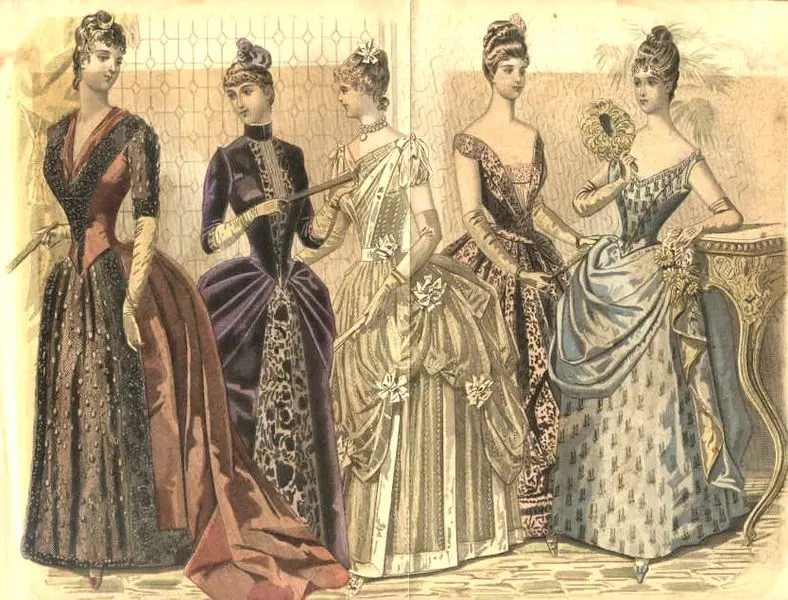
Image Source: Just History Posts
Queen Victoria's long reign from 1837 to 1901 saw dramatic changes in hairstyles that reflected shifting fashion ideals. These iconic looks reshaped the scene and mirrored society's changing attitudes and breakthroughs.
Early Victorian styles: Apollo loops and ringlets
Women of the earliest Victorian era wanted to create a feminine look with an oval or round shaped face. Long, thick tresses held great appeal, and women rarely cut their hair. Queen Victoria became a fashion icon and inspired the "Apollo Loop" when her reign began. This eye-catching style featured a plain or coiled plait of false hair attached to wires that created vertical loops on top of the head.
The typical style showed hair parted in the centre and smoothed to the scalp at the temples. Apollo knots stayed fashionable between 1840 and 1860. Hairdressers constructed them at the top of the head toward the back and added clusters of ringlets at the sides. Soft ringlets framing the face became a symbol of youth and modesty among young women and girls.
Mid century trends: buns, braids, and coils
The 1850s brought new transformations to hairstyles. Top knots grew smaller and moved further back on the head. Women embraced braiding more often and wore their braids "pinned neatly at the nape of the neck." Centre partings remained popular with face-framing curls, while knots and chignons settled lower on the head as time passed.
Women found help from the new department stores, which sold hairpieces. These additions let them create elaborate styles even without naturally thick hair.
Late Victorian styles: natural waves and the Marcell wave
Victorian women's hairstyles went through another revolution as the century drew to a close. François Marcel Grateau created what people called the Marcell Wave in the 1870s. This groundbreaking technique used a heated iron to create controlled waves, which looked more natural than tight curls.
The style became more available after inventors patented new curling irons. Hairdressers mastered the technique of "burnishing" wave patterns. They crimped curling tongs over and under the hair while using a comb to shape each wave's arc.
The Gibson Girl look emerged in the 1890s. This style featured hair piled high on the crown in tight coils and curls, often topped with fluffy bangs over the forehead.
Hair as a Tool of Rebellion and Expression
Hair evolved beyond fashion and status to become a powerful canvas for rebellion in Victorian times. Women found ways to express their independence through hairstyles. These expressions ranged from bold statements to subtle changes that reflected society's evolution.
Shorter cuts and the challenge to gender norms
Long hair symbolised ideal femininity through most of the Victorian era. The 'bob cut' emerged as a powerful statement against traditional expectations toward the century's end. This transformation reflected women's changing roles in society during the 1890s. Short hair remained rare among women before the 1920s. These styling choices showed remarkable courage. Opera singer Mary Garden captured this spirit in 1927. She said, "I consider getting rid of our long hair one of the many little shackles that women have cast aside in their passage to freedom".
Hair and the suffragette movement
The connection between political activism and hair grew stronger over time. Women in the suffragette movement made strategic choices about their appearance. Some kept conventional styles to help their message about legal rights reach a wider audience. Others chose shorter, practical cuts that visibly displayed their progressive ideals.
Subtle defiance through styling choices
Victorian women expressed their independence through hair styling even without dramatic cuts. The Gibson Girl look appeared in the 1890s with its signature "messy" updo. This style cleverly balanced flowing hair with an elegant frame for the face. It marked a pivotal moment where women could keep their traditional length while adopting a relaxed look that suggested independence.
Haircare, Rituals, and Symbolism

Image Source: Etsy
Victorian hair practises went beyond simple styling to cover rituals and deep symbolism. Women of this era created detailed practises to maintain and preserve their hair that showed their core values and beliefs.
Victorian haircare practises and products
Victorian women washed their hair once a month with mixtures of borax, olive oil and water. On top of that, they used egg yolks to protect their scalp or set their curls and crimps. Daily care centred on brushing: they did 100 strokes twice daily with brushes cleaned in warm water and bicarbonate of soda. People seeking hair growth used remedies like boxwood shavings in alcohol or rosemary rinses. Unlike modern quick styling methods, Victorians used powdered starch to dry wet hair and prevent "disagreeable odours."
Hair in mourning and remembrance
Queen Victoria started mourning traditions after Prince Albert's death in 1861 by ordering sentimental accessories with his hair. Death became central to Victorian life, and women had to follow strict mourning rules. Hair created a physical link to deceased loved ones and, unlike bodies, stayed preserved, giving people a lasting connection to remember them by.
Hair jewellery and sentimental keepsakes
Hair art began in 17th century England but reached its peak in the Victorian era. Not all hair jewellery was for the dead: friends shared locks before long trips, and lovers gave hair tokens to show affection. Women made detailed wreaths and jewellery using techniques called palette work (laying hair flat) or table work (plaiting into jewellery). Victorian homes often displayed hair wreaths, and women wore brooches, bracelets and rings with their loved ones' hair close to their hearts.
Conclusion
Victorian era hairstyles went beyond simple beauty to become a powerful language of status, morality and personal expression. Upper class women's elaborate updos clearly showed their wealth and leisure time, while working class women chose practical styles that worked with their daily duties. Queen Victoria's influence shaped these standards by a lot, from wedding day styles to mourning customs.
Hair became a canvas for telling personal stories. Women kept locks of loved ones in jewellery and wreaths to create lasting connections with those far away or deceased. This practise shows how much Victorians valued hair as a symbol of human connection and memory.
What's really interesting is how hair became a tool for quiet rebellion. The Gibson Girl look and later bobbed styles pushed back against traditional gender roles, while suffragettes used their hairstyles to send political messages. These women knew that even something as simple as hair could make a powerful statement against society's rules.
Victorian hairstyling meant much more than just fashion. These complex hairstyles tell deep stories about class structure, gender norms and our need to both fit in and stand out. When you look at a Victorian woman's portrait with her hair piled high, look past the curls and braids to read the rich social language in her styling choices.
Today's world might find Victorian hair customs strange, yet we still express who we are through how we look. From the Queen to working class maids, women used their hair to direct their way through complex social rules while finding small ways to speak up within their era's limits.
Key Takeaways
Victorian hairstyles functioned as a sophisticated visual language that communicated far more than fashion preferences, revealing intricate messages about social status, moral character, and personal rebellion.
Victorian women's hair served as immediate class indicators, elaborate updos signalled wealth whilst practical styles revealed working-class status
Hair symbolised feminine virtue and morality, with strict social rules governing when and where women could display loose hair publicly
Hairstyles evolved from early Apollo loops to natural waves, reflecting changing beauty ideals throughout Queen Victoria's 64-year reign
Women used hair as subtle rebellion tools, with shorter cuts and relaxed styles challenging traditional gender expectations by century's end
Hair held profound emotional significance through mourning jewellery and keepsakes, creating tangible connections to deceased loved ones
The Victorian era demonstrates how something as personal as hairstyling became a complex social communication system, balancing conformity with individual expression within rigid societal constraints.


The notion that Victorian hairstyles were a coded language of class, virtue, and quiet rebellion is fascinating. Hair as identity and defiance feels especially potent when social rules tighten. That same tension drives horror visual novels, where appearance and desire can hide something monstrous. In The False Sun, a boy's love becomes your nightmare, and every choice matters. If you're chasing all 20 endings, a step-by-step The False Sun walkthrough is genuinely helpful. It connects the era's obsession with surfaces to modern storytelling.
What a fascinating read. I love the idea that a Victorian hairstyle could quietly signal class or defiance without a single word being spoken — a coded language read instantly by anyone who knew the rules. It reminds me of word ladders, where each single-letter shift seems small but builds toward something completely new.
I've been playing endless rounds at poople-unlimited.com during breaks — no daily cap, no downloads, just unlimited puzzles whenever the mood strikes. Oddly similar satisfaction.
This is such a thoughtful angle: Victorian hair really did function as a coded language, signalling class, virtue, and quiet rebellion. I like how the piece moves beyond fashion to show identity and resistance. It reminds me of how much we can decode from everyday details, whether in a portrait or a street. If you enjoy that kind of visual detective work, try https://playworldguesser.com/ — you drop into random street view locations and guess where you are. Unlimited free rounds, no sign-up, and oddly addictive.
This piece nails something I've always felt about Victorian hair: it was never just aesthetics, it was signalling. A braid tucked a certain way could read as virtue, a looser style as quiet defiance. What strikes me is how that impulse never disappeared — we still express identity through how we present ourselves, just in different arenas. Even in games, customization does the same work; I've seen players obsess over low-poly car liveries the way Victorians obsessed over curls. If you enjoy that kind of self-expression, play PolyTrack online — the custom track builder scratches a similar itch.
I read a short review mentioning thedriftboss.com on a tech forum and got curious enough to check it out. No account needed, just open it and start playing. The single-button control scheme creates a surprisingly unpredictable feel, each turn is a bit of a gamble whether you'll make it or not. The site loaded fast with no issues throughout my testing.